Doctrine
A theology of Thomist roots, set out in the Treatise on the Spiritual Life and in his sermons, made accessible to all. See his works →
Doctor of the Church
We ask that St Vincent Ferrer be declared a Doctor of the Universal Church. Here we explain what the Holy See requires, where the cause stands, what remains to be done and by whom, and how you can join in.
The title
“Doctor of the Church” is the title the Church confers on certain saints whose teaching has been of particular benefit to the whole People of God. It is not a prize for erudition, but the recognition that their doctrine continues to serve as a guide.
The criteria were laid down by Benedict XIV in the eighteenth century and remain in force; they are set out and applied in the 1981 Instruction of the Congregation for the Causes of Saints. There are three:
The title does not make the whole of a saint’s work infallible: it recognises that his teaching is a sound and fruitful guide for the Church.
Were he proclaimed, St Vincent Ferrer would be the fifth Spanish Doctor, after St Isidore of Seville, St Teresa of Jesus, St John of the Cross and St John of Ávila.
1955 – today
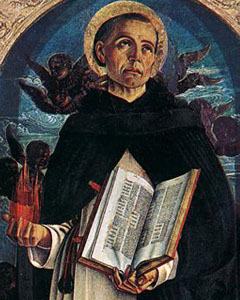
The idea is not new. In 1955, on the fifth centenary of his canonisation, the Archbishop of Valencia, Marcelino Olaechea, spoke of St Vincent as the “Doctor de la Paz”.
In 1958 the General Chapter of the Order of Preachers, meeting at Caleruega, resolved to work for his recognition as a Doctor of the Church, as the acts of that chapter record.
In recent years the cause has received fresh impetus from, among others, the Caballeros Jurados de San Vicente Ferrer, the Valencia–Vannes axis and the pastoral letter of Cardinal Antonio Cañizares around 2018. The process remains open: the declaration has not yet been made, and only the Pope can make it. See the state of the cause →
Where we stand
An indicative overview based on public sources; it will be updated when there is official news. If you have information that corrects or completes it, write to us.
Roadmap
Each step, where it stands and who would be responsible for taking it forward. This roadmap has been prepared by this site; it is not an official document of the Holy See.
The requirement of insignis vitae sanctitas is fulfilled.
Who: The Church · 1455
From Olaechea (1955) to the Vincentian Holy Year (2018–2019) and today’s outreach.
Who: Archdiocese of Valencia, Vincentian associations
Resolution adopted at Caleruega (1958); no visible formal follow-up yet.
Who: Order of Preachers
Joint document of 2016; broad episcopal and institutional endorsements still needed.
Who: Dioceses of Valencia and Vannes, Caballeros Jurados
A critical edition and systematic study: the foundation of the Positio.
Who: San Vicente Ferrer Faculty of Theology, scholars, Order of Preachers
Positio super Ecclesiae Doctoratu on the eminence of his doctrine.
Who: Petitioner of the cause (diocese or Order) and postulator
The cause is lodged with the Dicastery for the Causes of Saints.
Who: Postulator
Doctrinal examination, votes of the theological consultors and session of cardinals and bishops.
Who: Holy See
Proclamation as Doctor of the Universal Church.
Who: The Holy Father
An indicative overview based on public sources; it will be updated when there is official news. Send us corrections.
Our reasons
A theology of Thomist roots, set out in the Treatise on the Spiritual Life and in his sermons, made accessible to all. See his works →
A reputation for holiness in life and after death, confirmed by his canonisation in 1455. See testimonies →
He laboured for the unity of the Church and for concord between kingdoms and peoples. See his influence →
Join us
A personal expression of support for St Vincent Ferrer to be declared a Doctor of the Church. This is a personal initiative, not an official petition to the Holy See: endorsements are received at the project’s mailbox, info@doctordelapaz.org.
Something else? Write to info@doctordelapaz.org or use the contact page. See our privacy policy.