The process
Sworn testimony gathered by papal commissioners. On 29 June 1455 Callixtus III proclaimed his sanctity; the corresponding bull was promulgated later by Pius II, around 1458.
Miracles
From his death in 1419, St Vincent Ferrer’s reputation for holiness spread by word of mouth. Here we distinguish what the witnesses and the canonisation process record from what popular devotion has handed down.
1419 – 1455
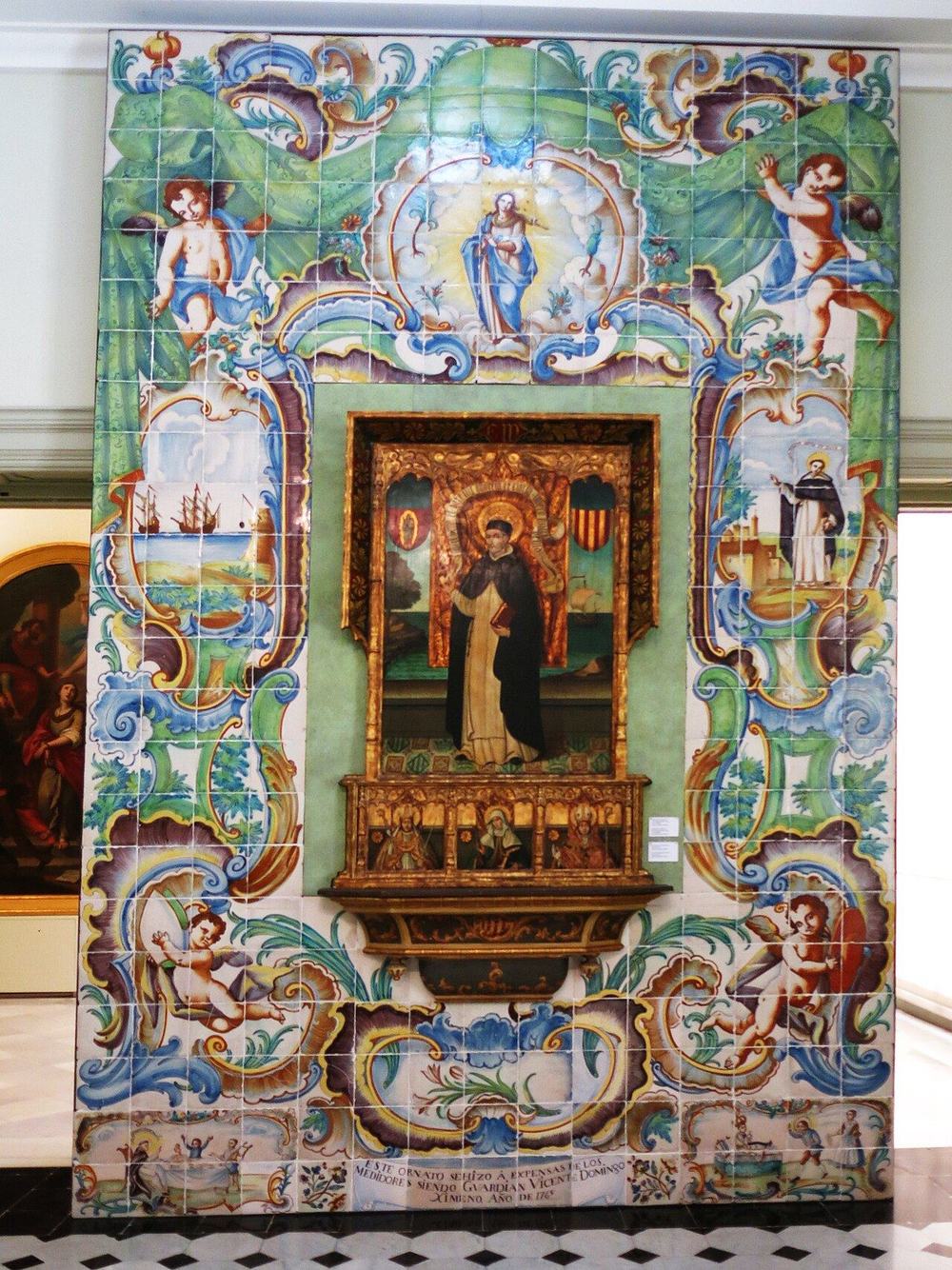
He was already held to be a saint in his lifetime. After his death in Vannes in 1419, his fame for holiness and miracles spread rapidly, and a spontaneous popular cult arose well before any official recognition.
In 1451 Pope Nicholas V opened the way to the canonisation process. Around 1453–1454 inquiries were held in Brittany (the most extensive), Toulouse and Naples. The Avignon inquiry has not survived, and others conducted in the Spanish kingdoms may also have been lost.
Hundreds of witnesses gave evidence in these inquiries. According to the sources, the dossier records a very large number of miracle accounts — more than eight hundred are often cited, though the figure varies depending on how they are counted.
Healings attributed to his intercession predominate, alongside wonders of other kinds described by the witnesses. We prefer not to reproduce individual accounts without a critical apparatus: the value of the process lies in the body of testimony as a whole, not in the anecdote.
Distinguishing in order to understand
Alongside the canonisation process there is a rich popular tradition of stories and legends, handed down for centuries in Valencia, in Brittany and elsewhere. It belongs to the memory of these peoples, but it should not be confused with what is recorded in the witnesses’ depositions.
Sworn testimony gathered by papal commissioners. On 29 June 1455 Callixtus III proclaimed his sanctity; the corresponding bull was promulgated later by Pius II, around 1458.
Following Fages’s edition (1904), Alfonso Esponera Cerdán published a bilingual edition of the Proceso de canonización (Valencia–Fribourg, 2018), based largely on manuscript 690 of the Biblioteca Histórica of the Universitat de València.
Vannes Cathedral, which keeps his relics, remains a place of devotion and pilgrimage.